
MCOT Patch Review: Is It Worth It?
 By Anna Krause November 18, 2026
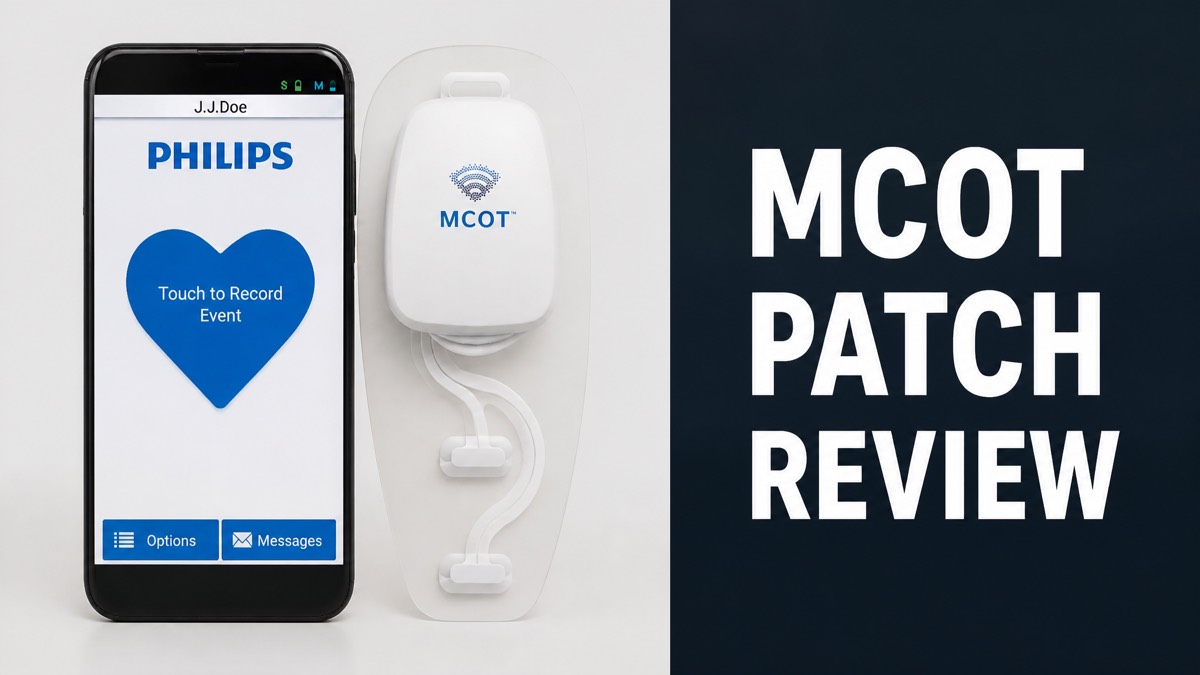
The MCOT patch is a prescription heart monitor from Philips that records ECG data for up to 30 days. A sensor sits on the chest, a monitor relays the readings, and technicians review them around the clock. Physicians order it to diagnose arrhythmias that routine office tests miss.
Wearers shower and exercise as normal, while patches change about every 5 days and the monitor charges nightly. The system never alerts the wearer about heart rhythms, and it works only inside the United States. Compared with a Holter, MCOT covers far more days and adds technician review of every urgent finding for the physician.
Cost depends on insurance, and most insurers cover the service. Skin irritation is the main comfort complaint. The sections below cover the kit, the evidence on atrial fibrillation, comparisons with other monitors, risks, billing, and the patients who benefit most from wearing it.
What Is the MCOT Patch?
The MCOT patch is a wearable heart monitor that records ECG data and sends it to a monitoring center. Philips Mobile Cardiac Telemetry, known as MCOT, tracks heart rhythm continuously for up to 30 days.
A physician prescribes MCOT to help diagnose certain heart arrhythmias. Routine ECG tests in a doctor's office often miss rhythm problems. Why? Those problems come and go. The monitor collects data while the wearer goes about normal activities.
MCOT records two channels of ECG data. The system stores that data for the full monitoring period of up to 30 days. Trained technicians review the readings and prepare clinical reports for the prescribing physician.
Who Makes the MCOT Patch?
Philips makes the MCOT patch and runs the monitoring service behind it. Patient Services answers questions about setup and billing 24 hours a day, 7 days a week.
Philips cites clinical evidence from 41 studies, articles, and abstracts for MCOT. To be clear, that figure comes from the manufacturer. The number supports the device's validation but does not replace independent comparison.
The SmartDetect algorithm powers the detection side. Cardiac technicians review every urgent, daily, and end-of-service report before the report reaches a physician.
Does the MCOT Patch Need a Prescription?
Yes. MCOT is a prescription-only medical device that a physician orders. Philips ships the kit to the patient's home, with delivery within days of the prescription order.
The physician sets the length of monitoring. The wearer keeps the device on for the full prescribed period. Clinical reports reach the physician during the service and again at the end.
How Does the MCOT Patch Work?
The MCOT patch records heart rhythm through a sensor and relays the data to a monitor by Bluetooth. The monitor then transmits the ECG data wirelessly to Philips around the clock.
The system analyzes heart activity beat by beat. Certain abnormal beats go to cardiac technicians at Philips. Those technicians watch for unusual activity 24 hours a day, 7 days a week.
Cellular coverage drives the transmission. What happens in a dead zone? The monitor stores the data and sends it once service returns. A baseline ECG test records automatically at first activation.
Wearers log symptoms with a Touch to Record Event button on the monitor screen. Each entry gets a timestamp on the reports sent to the physician. Wearers can also log medication and activity level.
What Does the MCOT Kit Include?
The MCOT kit contains a sensor, adhesive patches, a monitor, and chargers. The sensor snaps into a disposable patch that sticks to the chest.
Kit Contents:
- Sensor that snaps into the patch
- Adhesive patches
- Touchscreen monitor
- Chargers for the sensor and the monitor
- Patch placement template
- Prepaid return envelope
The sensor weighs under 1 ounce (28 grams) and resists water. A rechargeable battery powers the sensor. A full charge takes up to 90 minutes, and several patches cover the full service period.
The monitor works like a phone with a touchscreen, a built-in patient diary, and several language options. A full charge takes up to 4 hours. So when does it charge? At night is the recommended routine.
Three wear options exist: the standard patch, the FLEX adapter, and a lead wire adapter. A wearer who feels discomfort from the patch can switch to the lead wire adapter in the kit.
What Are the Benefits of the MCOT Patch?
The MCOT patch extends heart monitoring to as long as 30 days. Why does that matter? Longer wear time raises the chance of catching rhythm problems that appear only now and then.
Technicians review readings continuously. Urgent and emergent notifications reach the physician so treatment decisions move faster. Philips credits this speed to MCOT's detection and high diagnostic yield.
And daily life continues during monitoring. Wearers shower and exercise as normal, and the sensor weighs under 1 ounce (28 grams). Alternate wear options let a patient change form factor if one style bothers the skin.
Main Benefits:
- Up to 30 days of monitoring
- Technician review around the clock
- Two channels of ECG data
- Showering and exercise allowed
- Several wear options
Does the MCOT Patch Detect Atrial Fibrillation?
Yes. MCOT detects hidden atrial fibrillation during extended monitoring. One study found a 17.3% detection rate of occult paroxysmal AF across up to 30 days of wear.
Detection peaked at 19.5% by day 21 in that same study. Why does wear time matter so much? Longer wear raised the odds of a finding. Patients with cryptogenic stroke or transient ischemic attack are the group where MCOT gets preferred over a Holter.
Philips published a cost model of 1,000 stroke patients. MCOT followed by an implantable loop recorder detected 4.6 times more AF patients than a loop recorder alone. The model comes from the manufacturer, which tempers its weight.
What Do MCOT Patch Reviews Say?
Independent patient ratings of the MCOT patch are scarce in public sources. Most available material comes from Philips, its patient guides, and cardiology practices. Is there a star score to quote? No honest star score or satisfaction percentage exists to report here.
Here's what the documented patient experience covers: wear and upkeep. Mild itching or irritation under the electrodes is described as usually temporary. Patches need replacement about every 5 days, and the monitor needs daily charging.
What Are the Common Complaints?
Skin irritation is the most documented comfort issue with the patch. Philips states that mild itching under the electrodes is usually temporary. Wearers with sensitive skin may find the patch less than ideal.
Routine upkeep is the other burden. How much is there? A patch lasts about 5 days, the sensor needs a recharge of up to 90 minutes at each change, and the monitor needs a daily charge.
Connection messages round out the list. A No Communication message means the sensor sits out of range of the monitor. Wearers contact Patient Services if the message lasts longer than 15 minutes.
How Does the MCOT Patch Compare to Other Heart Monitors?
MCOT combines continuous recording with real-time transmission to a monitoring center. In plain English, that pairing sets the device apart from simpler heart monitors.
A Holter monitor records for 24 to 72 hours and sends no real-time alerts. An event monitor runs for up to 30 days but records only when the wearer triggers it, or when certain models detect an abnormal rhythm.
Patch monitors such as Zio and Bioflux record continuously for 14 to 30 days. Each vendor usually runs its own portal and workflow. MCOT adds a live monitoring center with technician review.
Implantable loop recorders need surgical implantation, while MCOT stays on the skin. Philips's cost model positions MCOT as a first step before a loop recorder in patients with cryptogenic stroke.
Monitor Comparison:
| Monitor | Typical Wear | Recording Style |
|---|---|---|
| Holter | 24 to 72 hours | Continuous, no real-time alerts |
| Event monitor | Up to 30 days | On trigger, or on detection with some models |
| Patch monitor (Zio, Bioflux) | 14 to 30 days | Continuous |
| MCOT | Up to 30 days | Continuous with live transmission |
Is the MCOT Patch Better Than a Holter Monitor?
Yes, for longer monitoring. MCOT covers up to 30 days while a Holter covers 24 to 72 hours. Why do extra days matter? Rare rhythm events get more time to appear.
One comparison reports a diagnosis in 61% of MCOT users against 24% of Holter users. A separate 146-patient trial found a 14-day adhesive patch recorded 96 arrhythmia events against 61 for a 24-hour Holter.
But Holter makers disagree on the bigger picture. Viatom, which sells Holters, argues that Holter remains the choice for most patients. Automated detection in MCOT systems can also produce false alarms.
What Are the Side Effects and Risks of the MCOT Patch?
The MCOT patch causes mild skin itching or irritation in some wearers. Philips describes the reaction as usually temporary. Persistent irritation calls for a message to Patient Services.
Skin preparation lowers the irritation risk. Wearers shave chest hair, wash and dry the skin, skip lotions and oils, and scrub for 60 seconds. When reapplying in the same area, the scrub pad stays unused. Broken or irritated skin calls for a slightly different position.
Skin Prep Steps:
- Shave chest hair in the indicated area.
- Wash the area with soap and water.
- Dry the skin thoroughly with a towel.
- Skip lotions and oils.
- Scrub the area with the scrub pad for 60 seconds.
For flyers, here's the thing: the device carries a lithium-ion battery. Air travelers tell TSA that the device cannot be removed from the skin without interrupting monitoring. The monitor goes into Airplane Mode for the flight.
Can You Shower and Exercise With the MCOT Patch?
Yes. Showering and exercising are fine with MCOT in place. Philips tells wearers to shower and exercise as normal during the service.
The bad news? Swimming and baths are off limits. The sensor resists water but is not waterproof, so submerging it in water is not allowed.
Philips encourages wearing the device as much as possible. More wear time gives the physician more data for an accurate diagnosis.
Does the MCOT Patch Alert You to Heart Problems?
No. MCOT never alerts the wearer about heart rhythms. Any sound the monitor makes relates to technical issues such as a low battery or a loose wire.
Technicians review data and in some cases contact the physician directly. So will the patient get a call? Only when the physician makes a specific request.
MCOT is not an emergency response system. The monitor cannot place outgoing calls, even in an emergency. A wearer facing a medical emergency calls 911.
And the system doesn't transmit data outside the United States. Wearers planning foreign travel contact Philips Patient Services first.
How Much Does the MCOT Patch Cost?
The MCOT patch has no fixed price in the manufacturer's patient materials. The service is billed to the insurer, so the final bill depends on the insurance plan.
When does the meter start running? Charges start when monitoring begins. The insurer then sends an Explanation of Benefits, which is not a bill. If a balance remains, Philips sends a statement for the patient's portion.
Out-of-pocket cost comes from deductibles and coinsurance. Philips directs billing questions to its Patient Services team.
Does Insurance Cover the MCOT Patch?
Yes, in most cases. A majority of insurance providers cover MCOT services. The insurer is billed first, and the patient owes the portion set by the Explanation of Benefits.
Aetna's clinical policy bulletin addresses mobile cardiovascular telemetry and names the CardioNet MCOT service among its examples. Coverage rules vary by plan, so a call to the insurer before service starts removes surprises.
A Philips cost model argues that MCOT saves money in stroke care. Cost per detected AF patient lands at USD 29,598 with MCOT then a loop recorder, against USD 228,507 with a loop recorder alone.
How Do You Get and Return the MCOT Patch?
A physician's prescription starts the process. Philips ships the kit to the patient's home, with delivery within days of the order.
Setup follows four steps: prepare the skin, snap the sensor into the patch, apply the patch with the chest template, and power on the monitor. A green light confirms the sensor works.
Setup Steps:
- Prepare the skin with the steps in the guide.
- Snap the sensor into the patch and check for gaps.
- Apply the patch to the chest with the placement template.
- Power on the monitor and follow the on-screen guidance.
Returns cost nothing. The kit goes back in the prepaid shipping envelope after the service ends. Failure to return the equipment promptly can bring a bill for its cost.
Is the MCOT Patch Worth It?
Yes, for the right patient. The MCOT patch delivers up to 30 days of continuous ECG monitoring with technician review. Showers, exercise, and daily routines continue as normal.
Bottom line: the drawbacks are real. Skin irritation, patch changes, daily charging, and no rhythm alerts for the wearer all come with the device. The service works only inside the United States, and much of the supporting evidence comes from the manufacturer.
Pros:
- Up to 30 days of monitoring
- Technician review around the clock
- Showers and exercise allowed
- Lead wire adapter for patch discomfort
- Billing handled through insurance
Cons:
- Skin irritation in some wearers
- Patch change about every 5 days
- Daily monitor charging
- No rhythm alerts for the wearer
- Works only in the United States
Who Is the MCOT Patch Right For?
Patients with unexplained stroke, palpitations, or suspected atrial fibrillation fit the profile. Philips lists clinical pathways that include post-cryptogenic stroke, post-TAVR, and AF ablation monitoring.
Patients with sensitive skin need a conversation with the physician first. Philips notes the patch may not be ideal and offers the lead wire adapter. Patients who travel abroad face the United States only limit.
Coffee Loving Card Makers is a reader-supported platform. Purchases made through our links may earn us an affiliate commission at no extra cost to you. Learn more.